“Leave me the fuck alone” comes out as “Well, maybe. Sure. I guess I can see your point.” (pg. 34)
Either way, I’m more afraid of conservatives than I am of black people. (pg. 111)
I’ve become one of those people I hate, the sort who go to the museum and, instead of looking at the magnificent Brueghel, take a picture of it, reducing it from art to a proof. (pg. 174)
Of the many expressions we Americans tend to overuse, I think the most irritating is “Blind people are human too.” They are, I guess, but saying so makes you sound preachy and involved, like all your best friends are blind. (pg. 19)
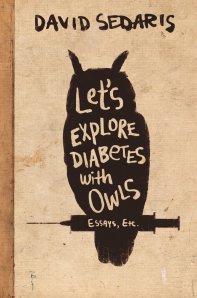
Synopsis: A collection of essays, short stories, and vignettes by North Carolina-native humorist David Sedaris. Topics range from littering issues in England, judging strangers with strangers at the airport, and brutally hysterical memories of childhood. Some fiction, some reality, plenty of laughs.
Opinion: This book was recommended to me when I was looking for a lighter read. I’d heard a lot about Me Talk Pretty One Day and thought I’d give Let’s Explore Diabetes with Owls a chance, if for no other reason than to be able to repeat that title anytime someone asked me what I was reading.
This book did not disappoint. I’m new to the humor genre, but whoever I read next most certainly has big shoes to fill. I was impressed by Sedaris’ ability to weave stories back to the beginning – to bring them full circle. You’d think you were going off on some wild tangent, but then somehow, before the end, you’d end up right back where you started – usually with a shift in perspective.
Instead of reading it straight through, I would read a chapter whenever I was bored or needed a break from another book. The great thing about reading a collection of essays is you don’t have to remember what happened before, so I stretched this one out over several months.
Although I didn’t laugh out loud as much as I anticipated, I did chuckle silently to myself quite often.
Overall: 3.5 out of 5
Who should read this book: Sedaris fans, of course. Anyone who loves Deep Thoughts by Jack Handy or anyone who needs something light to read in short bursts, which may or may not result in snort-laughter, depending on your sense of humor and level of self-control.
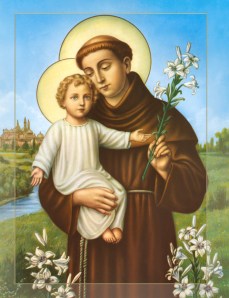
Saint Anthony, Saint Anthony, please look all around. Something is missing that needs to be found.
Those are the words my mother would recite every time something was lost in our household. Except she’d replace the “something” with the name of the misplaced item: my homework, a favorite pair of shoes, or most often, the car keys. She’d finish off the request with a triumphant “Thank you, Saint Anthony,” always confident in her faithful patron saint of lost things.
Saint Anthony usually pulled through for her, too. With the exception of her engagement ring – and I’m sure he did his best with that one – I can’t remember a single time the requested item wasn’t found. And believe me when I tell you, we kept the poor guy busy.
Maybe it’s because my mom was such a spiritually keen woman. She was on a first-name basis with many saints and angels. Or maybe she just had that mother’s instinct, the sixth sense of knowing where something was without ever having seen it.
“That’s what mothers are for!” she would have sung at me upon finding something I’d lost. I’d just shake my head in disbelief, dumbfounded by her mom-magic.
The trouble is that not all lost things are meant to be found. And the thing I’ve lost now is my mother. Despite my prayers, all the patron saints and angels in heaven cannot help me.
When I was younger, mom once asked that if something was ever to happen to her, would I want her to come back as a shooting star or a rainbow? Perhaps even a budding rose? A question to which I’m pretty sure I responded that coming back from the dead in any form was going to scare the shit out of me, and she should probably just rest in peace.
So I guess you’d call it ironic that just four months after her death, I find myself constantly concentrating on the night sky, hoping to spot even the faintest star taking a dive.
Thus far, I haven’t seen one. Some nights I can’t see any stars at all.
But there are other times when I sense her presence without the help of stars and rainbows and fresh blooms. Like when I walk into a cafe that’s playing Paul Simon’s Graceland on repeat. Or when I find an old photo of her that’s fallen down the side of the fridge. Or even last night, when I grabbed a novel from my bedside table, hoping to finish it off before falling asleep, and in the final pages, it quotes the prayer to Saint Anthony.
And in those moments, I’m flooded with memories of her. Memories I’d completely forgotten. Memories worth more than shoes and homework and engagement rings and everything she and I have ever lost combined.
I have to believe it’s because of her. That somewhere not-so-far away, my mom is still calling on her old friend to find the things I’ve lost.
So thank you, Saint Anthony, for bringing her back to me.
Those that had gathered below let out a unified gasp. Mothers drew young children into their bodies to shield their innocent eyes. Business men with slick hair and shiny shoes, already late for afternoon meetings, emails piling up in their inboxes, remained frozen with shock. Some turned their faces in anguish; others buried their heads into their hands.
But Nathan refused to look away.
He had arrived at the corner of Bristoff and West 1st an hour earlier, just as he’d been directed in the letter. And there he waited, holding her words in his sweaty palms as the blue ink began to bleed into his skin.
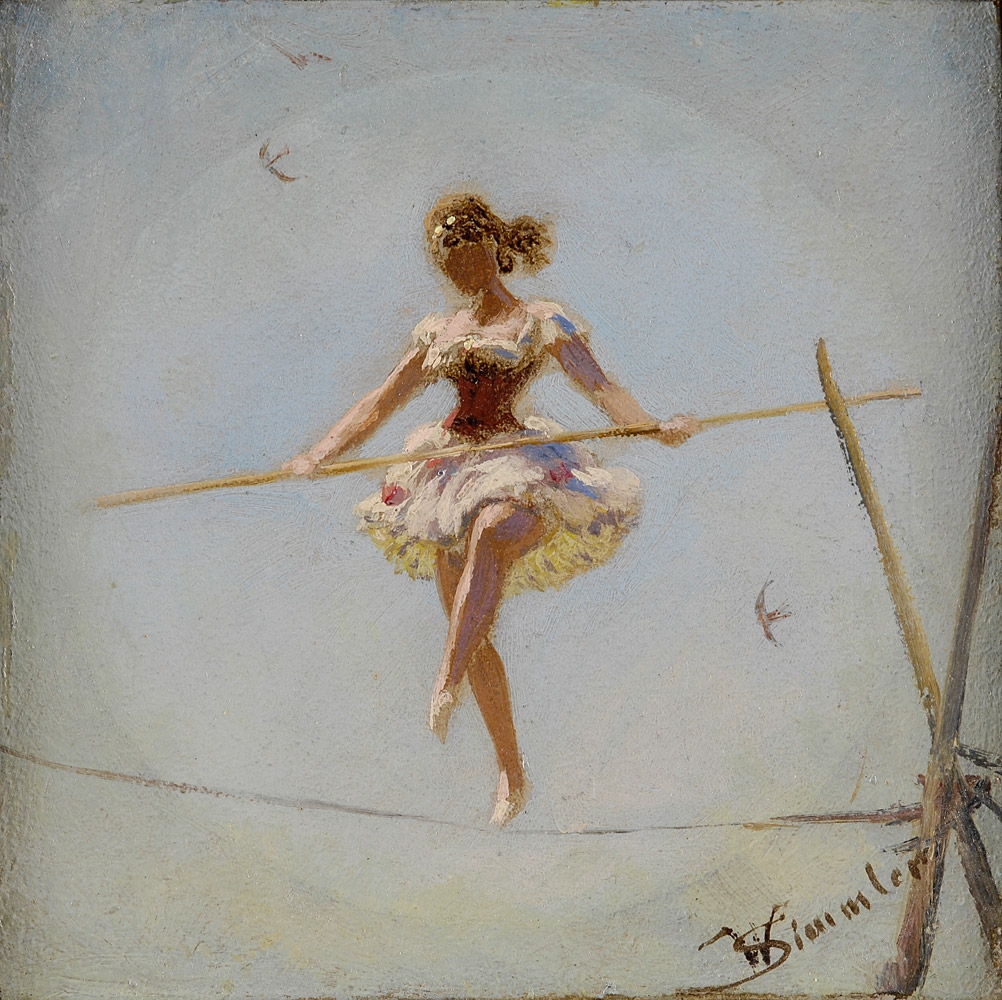
When she appeared, stepping off the edge of the highest building with confidence and grace, he had to squint to make out her sleek silhouette. Even then, he could barely detect the slight line beneath her feet, the highwire splitting the sky.
In the letter, her words had been pleading and honest.
Nathan –
I write you requesting a specific favor. And in return, I offer you the perfect angle for a piece in your underground pub (I’m afraid it won’t be suitable for the mainstream edition).
I’m sure you’ve heard of the most recent sanctions. They’ve moved beyond guns and liquor and cigarettes to recreational pursuits. Skydiving, long-distance running, skiing, rock climbing, hang gliding, bull riding – all sanctioned. And the list goes on; there are hundreds more.
They’re saying it’s to protect us, to keep us safe from these “high-risk” activities. Can you believe that? They’re hobbies, for Christ’s sake! But that’s the world we live in: a dictatorship under the guise of excessive mothering!
As she began to make her way across the wire, a crowd formed on the sidewalks and street corners. For a moment, the busy world halted mid-sentence, mid-stride, mid-latte to wonder at this figure walking across the sky.
This isn’t about risk, Nathan. No, no, no. It’s never been about that. This is about stifling what drives us, what gives us purpose. This is about stomping out our embers of passion. This is about breaking us down.
Soon, it’ll be painting and singing and writing. They’ll say they’ve linked creativity to brain cancer; they’ll offer data from their own studies to back the claims.
That’s why you started the underground paper, isn’t it, Nathan? Because they took away your editorials? No more opinions, just the facts, right?
Only minutes had passed before marshals from the Enforcement could be seen from the roofs of both buildings – the one she had stepped off of and the one she was destined for. They waited eagerly for her arrival, like predators who had chased their prey up a tree. But she seemed not to notice their presence, focused solely on her act and nothing more.
Of course, the skywalk was on the sanction list. Hell, the old-fashioned tightrope made the list! But I can’t give it up, Nathan. It’s all I’ve ever known.
I’ve got a plan to prove them wrong. And I need you there. I need you to cover the story.
Come to the meeting of Bristoff and West 1st – in front of the old stock exchange – the first Monday in April, 1:55 in the afternoon. You’ll know where to look for me.
Please bring your camera – and don’t be late.
Yours,
Aurelia
Suspended halfway between the two high rises, her progress stopped. Motionless except the wind whipping her ponytail with violent ferocity, she raised her head first to the overcast sky. Then shifted her gaze to what waited below.
Nathan felt the sudden, overwhelming sensation of his lunch rising in his stomach. It had not occurred to him before that moment that she had no intention of making it across.
Unrolling the wrinkled letter once more, he saw something he had missed: a postscript scrawled across the back in faint pencil.
The most high-risk activity of them all is denying ourselves what we love. We simply cannot survive it.
We have to let them know. We have to let everyone know.
Nathan looked up only to see her fold her arms across her chest before letting herself fall backward, the triumphant finale to her last great act.
Grabbing the camera from around his neck, he waited for his shot as she fell from the sky.
My dad called me as I left work today to keep me company on my drive home. He’s buying a property in the hills of North Georgia. Ten acres of sunshine to build a cabin on, a place to watch for shooting stars.
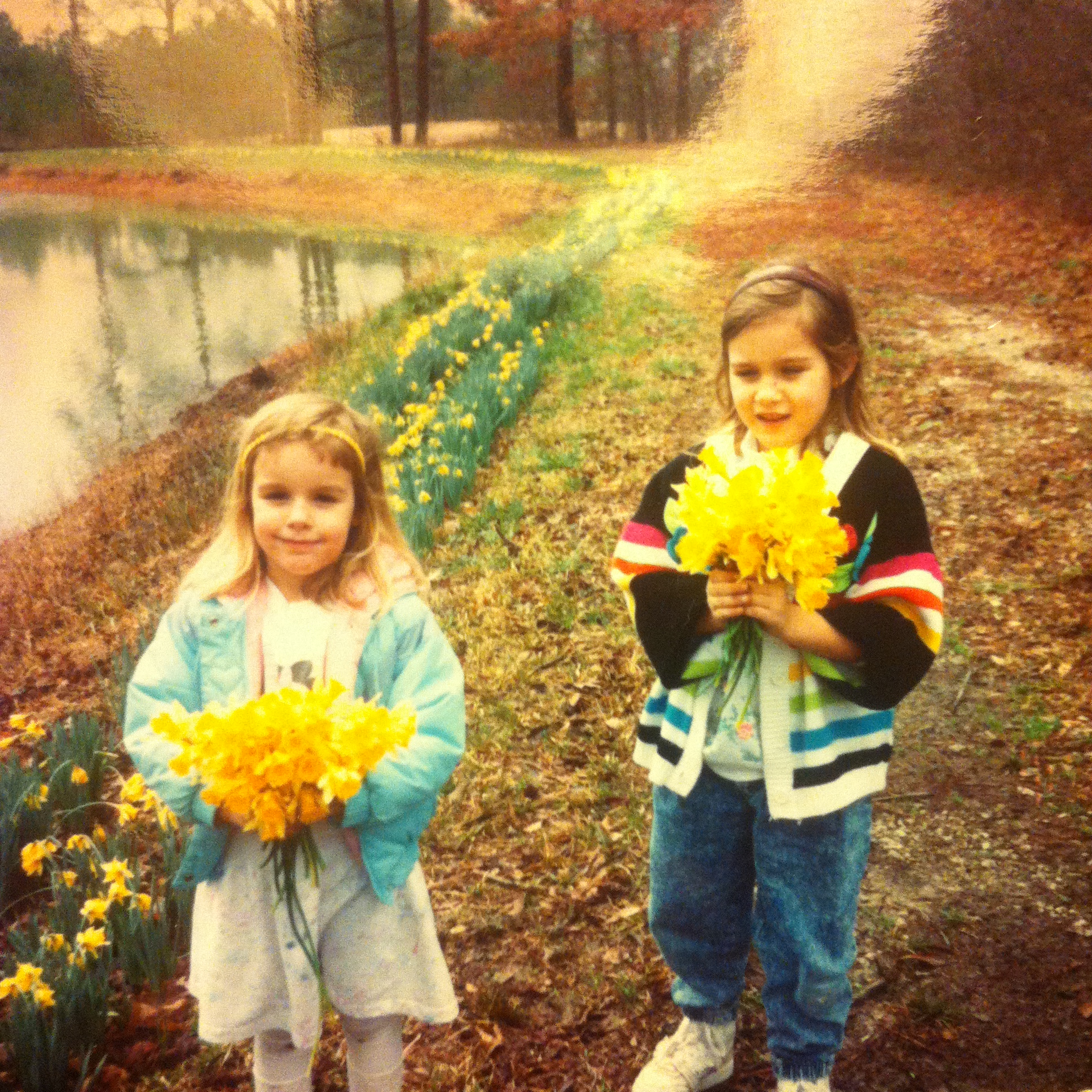
He drove there this past weekend – to walk the property lines. It was his first time seeing it all done up for spring time. There’s a long row of daffodils, he said. Then a long row of iris. Then a long row of hyacinth. There are blueberry bushes. And there’s more still left to bloom.
You would have thought he found an oil well, the way his voice lit up as he described the budding scene to me.
But that’s the kind of man he is. The kind who identifies all the birds as they arrive at the feeder – gold finch, indigo bunting, mourning dove, chickadee. The kind who counts his deer encounters as he winds through the trails at Cheatham Hill Park. The kind who ad-libs songs on my voicemail on Friday mornings.
The kind who sees the hope in the jonquils. And calls just to make sure I see it too.
Because each day the sun rises and pulls me gently from a dream, leaving your laughter echoing in my ears, only to rediscover that you’re gone, I know I’m not over it. And each day I creep along the Don Holt Bridge in rush-hour traffic, looking out my window at the diamonds blinking on the water below, and pick up my phone to call you and tell you about my day, I know I’m not over it. And as my mind races while I try to get some sleep, and when I forget to put sugar in my homemade oatmeal, and when I want so desperately to write about anything else, but the blank pages just stare back wanting only to hold more memories of you, I know I’m not over it.
No more than I was the day I let you go.
So when I heard those words – “You just don’t ever get over it” – my heart let out a heavy sigh. A burden I didn’t even know I carried, lifted from my shoulders.
For the rest of my life, my eyes may well with tears when I see a proud mother embracing her child. My throat may tighten like I swallowed a tennis ball every time I hear the singing of a choir. And our final moments together may always be the last thing I think of before I fall asleep.
And that’s okay. Because some things you don’t ever get over.
And now that I know, I can stop trying, stop hoping, stop waiting. For peace and normalcy and comfort that will simply never come.
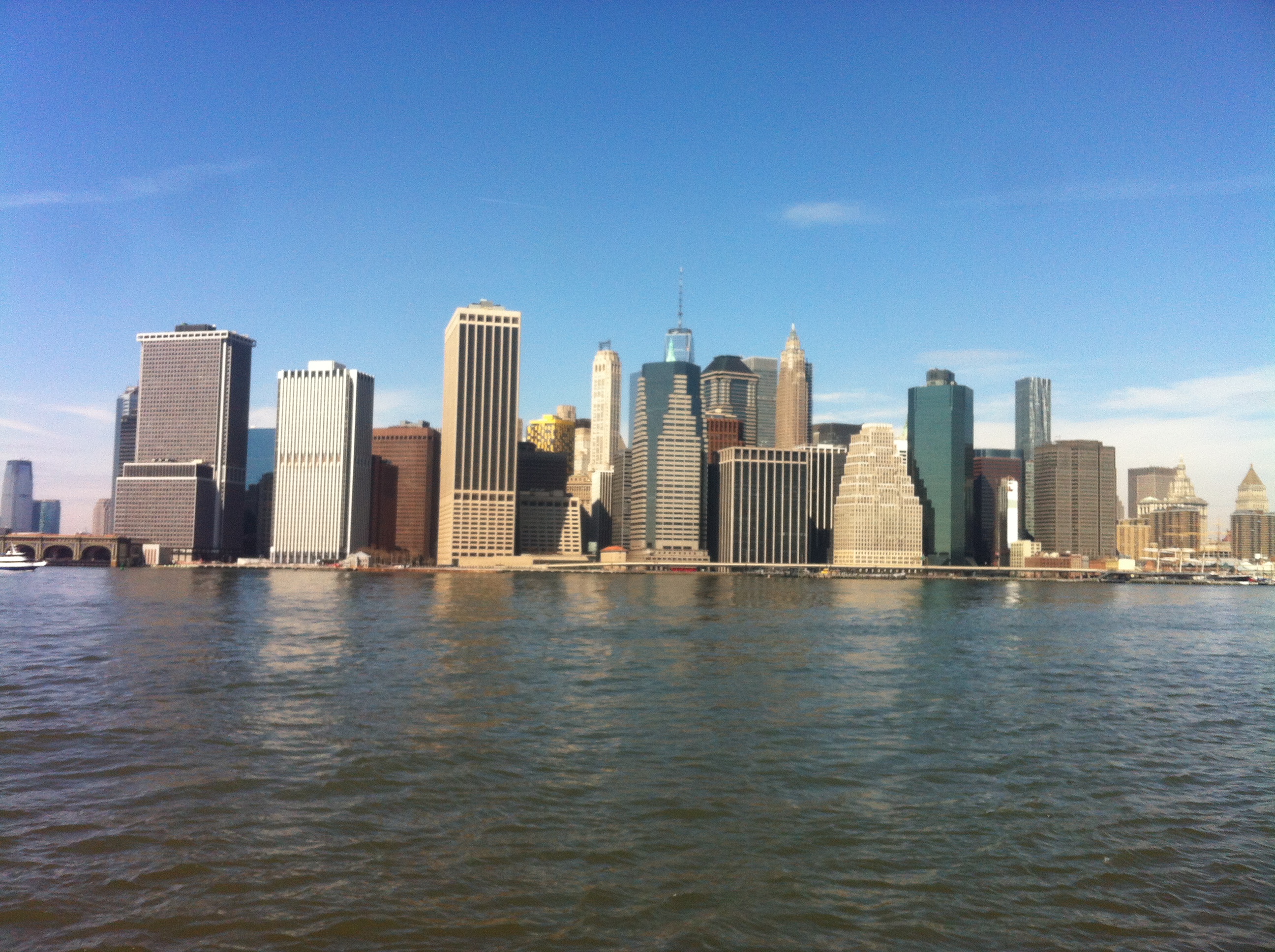
I visited my sister in Brooklyn this past weekend. Instead of touring the Statue of Liberty or Empire State Building or Central Park, we explored her favorite bakeries and adorably cramped cafes. We shopped at local fish markets and butcheries and grocers. We sampled fresh-baked croissants and sipped on mulled wine. We dined on fish ‘n chips and roast beef sandwiches.
And despite the skyscrapers and honking taxi cabs and smog-covered snow and foreign languages and beautiful diversity, there was something about the city that felt quaint, as if Brooklyn was just any other small American town. Like shop owners beaming with pride as they hand you a bagel or a baguette. Or two neighbors sharing a hug when they run into each other on the street. And even the little sign hanging on the window of the shoe repair on the corner, handwritten in black permanent marker, “Out for a moment. Back in 5 minutes.”
It could have been anywhere. And it could only be Brooklyn.